Close-up of a gas cap

HVO as an alternative fuel at Wacker Neuson

Wacker Neuson is constantly expanding its product portfolio and provides innovative solutions for sustainable construction sites. One of these solutions is the use of HVO fuels. This way, operators of construction machines can reduce their CO₂emissions by up to 90% and improve their ecological footprint. 

But what exactly is HVO? What are the advantages of the fuel and where can you refuel HVO? Find out all important points here.

What is HVO diesel and how does it work?

HVO stands for hydrotreated vegetable oils and refers to a synthetic diesel fuel made of renewable raw materials such as vegetable oils or animal fats. Compared to fossil diesel, the CO₂ emissions can be reduced by up to 90 percent by using HVO. At the same time, the fuel has the same properties and is fully compatible as per the standard EN15940. Thanks to its sustainable production using renewable raw materials, HVO contributes towards reducing the dependence on fossil energy sources and in improving the sustainability in the construction industry considerably.

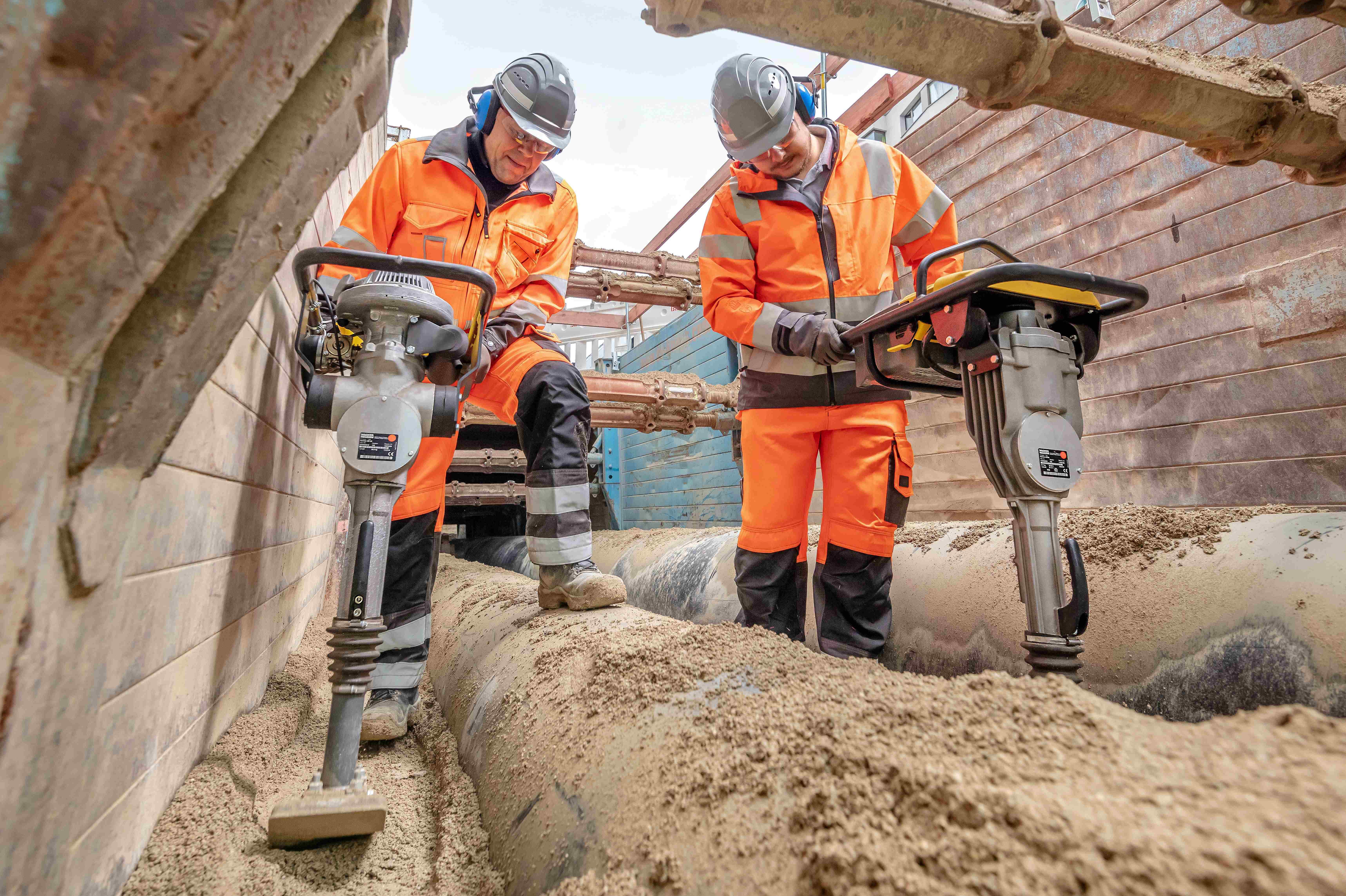
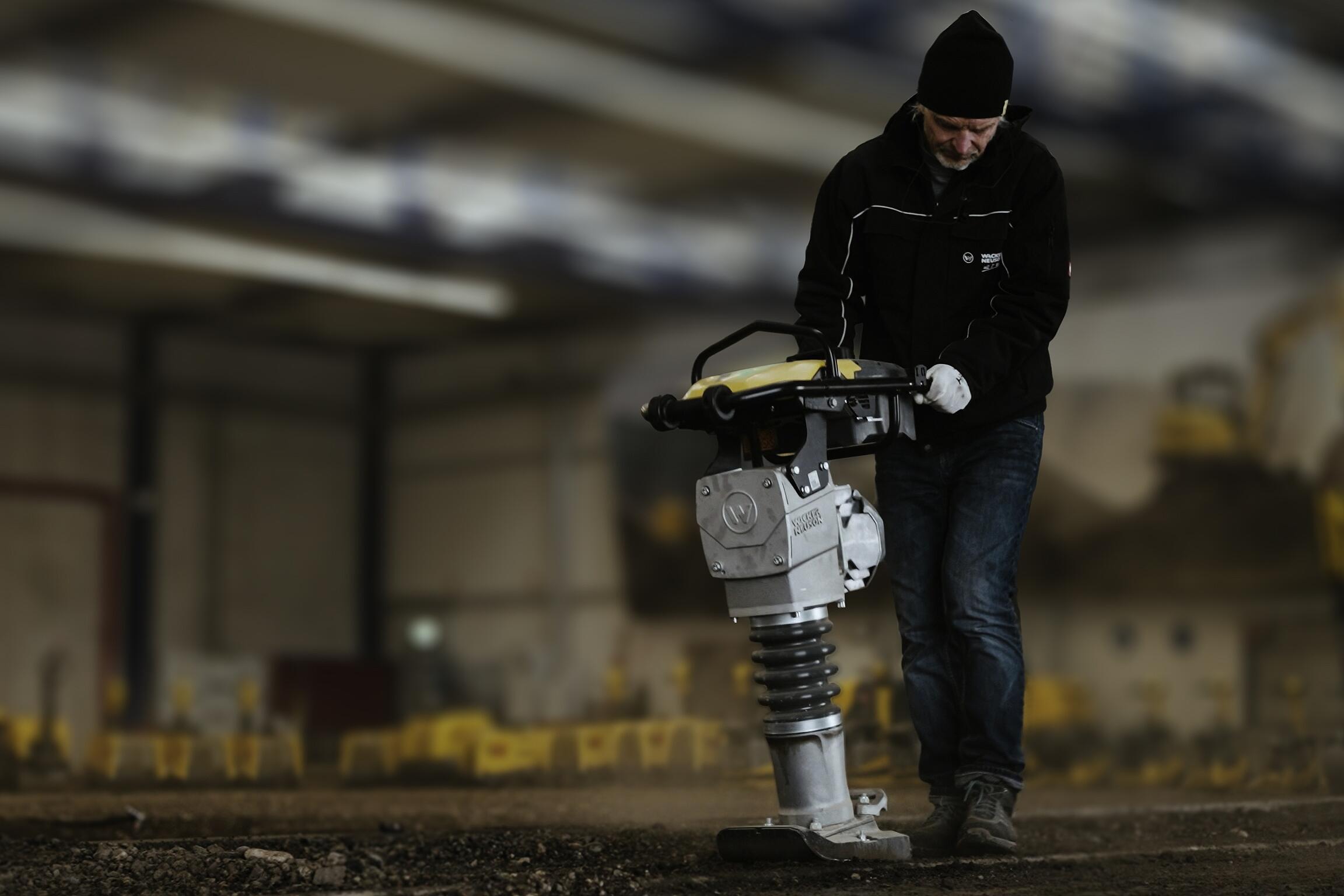
vibratory plate in action
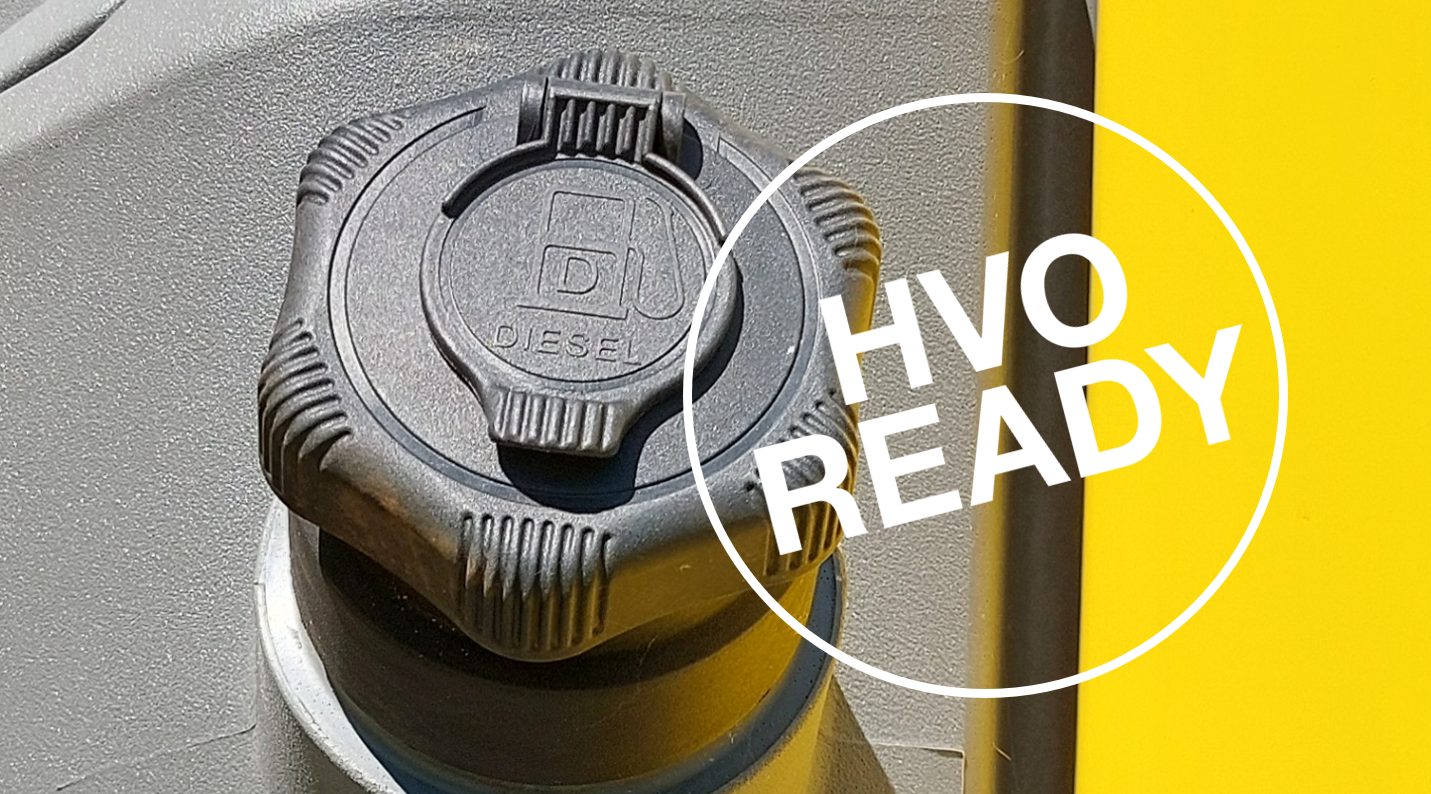
Close-up of a gas cap
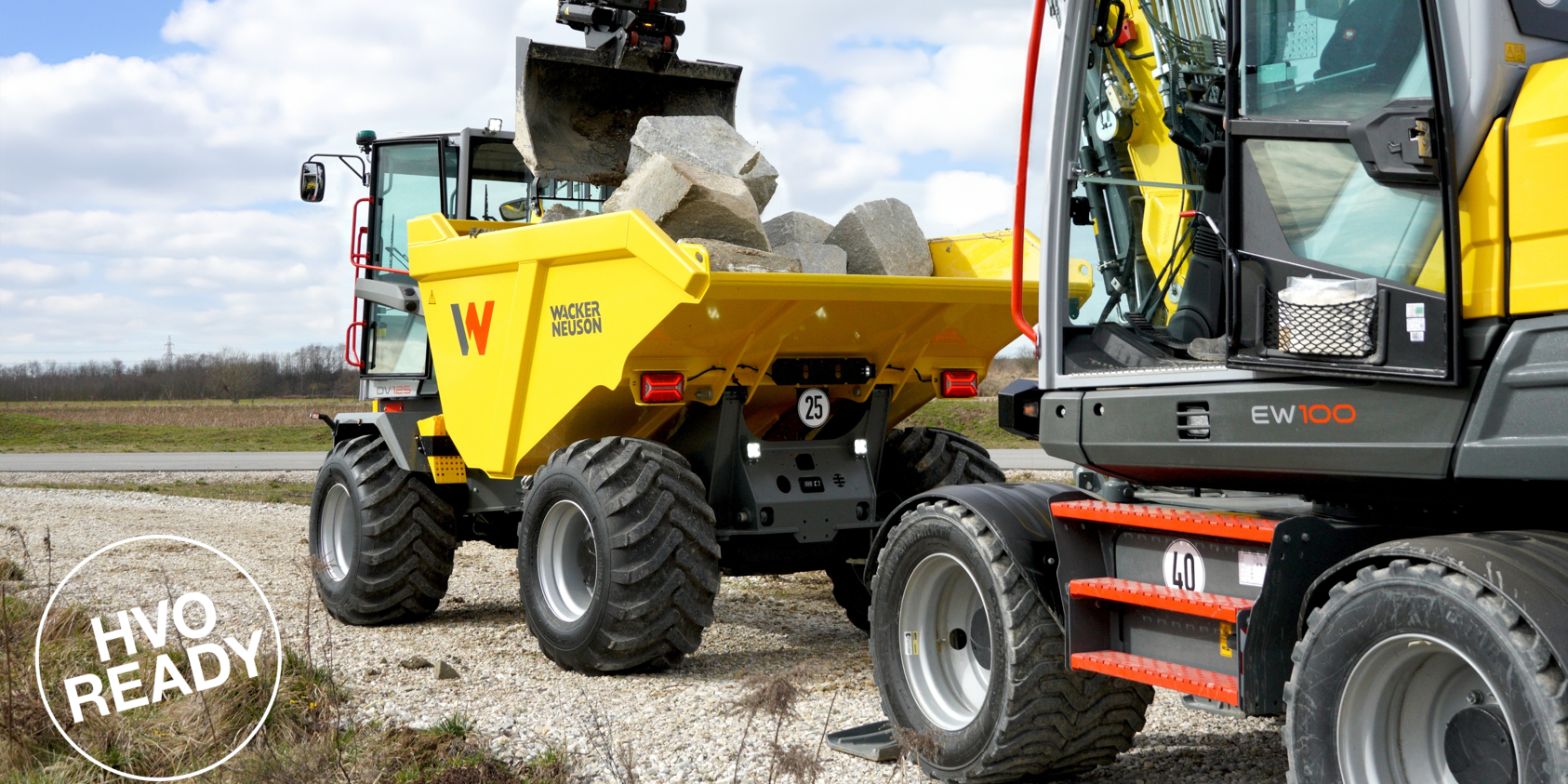
wacker neuson excavator and dumper working together

HVO advantages for construction machines: sustainable, efficient, future-proof

The use of HVO fuel offers numerous advantages—both for the environment and for machine performance:

  • HVO fuels are climate-neutral because they only release as much CO2 as the plants have absorbed previously. 
  • HVO fuels are biodegradable and do not contain any sulfur or nitrogen oxides. If there is a leak or an accident, they do not have any harmful effect on the environment and can be disposed of easily.
  • HVO fuels are produced from various locally available raw materials, such as used cooking oil, animal fat, or waste wood. This means that they are not dependent on global oil prices and promote the regional economy.
  • HVO fuels burn cleaner, i.e. with fewer particulate matter and nitrogen oxide emissions, and produce fewer deposits. This can lead to improved engine output.
  • HVO fuels are odorless and can be stored for many years.

By the way: During application, it can be seen that HVO fuels have no negative impact on the long service life, the maintenance intervals, or the emission behavior of the engine.

Where can you refuel HVO?

In many European countries, HVO fuel has been available for several years. In Germany, it was officially released for sale in May 2024 and is now available at a growing number of gas stations—recognizable by the label XTL (“X-to-Liquid”) in accordance with DIN 15940.

Important: Not to be confused with Biodiesel (B10) ! This is also available at gas stations. However, HVO is processed in a different way and offers better properties for the engine and the environment.

Which Wacker Neuson machines are HVO-compatible?

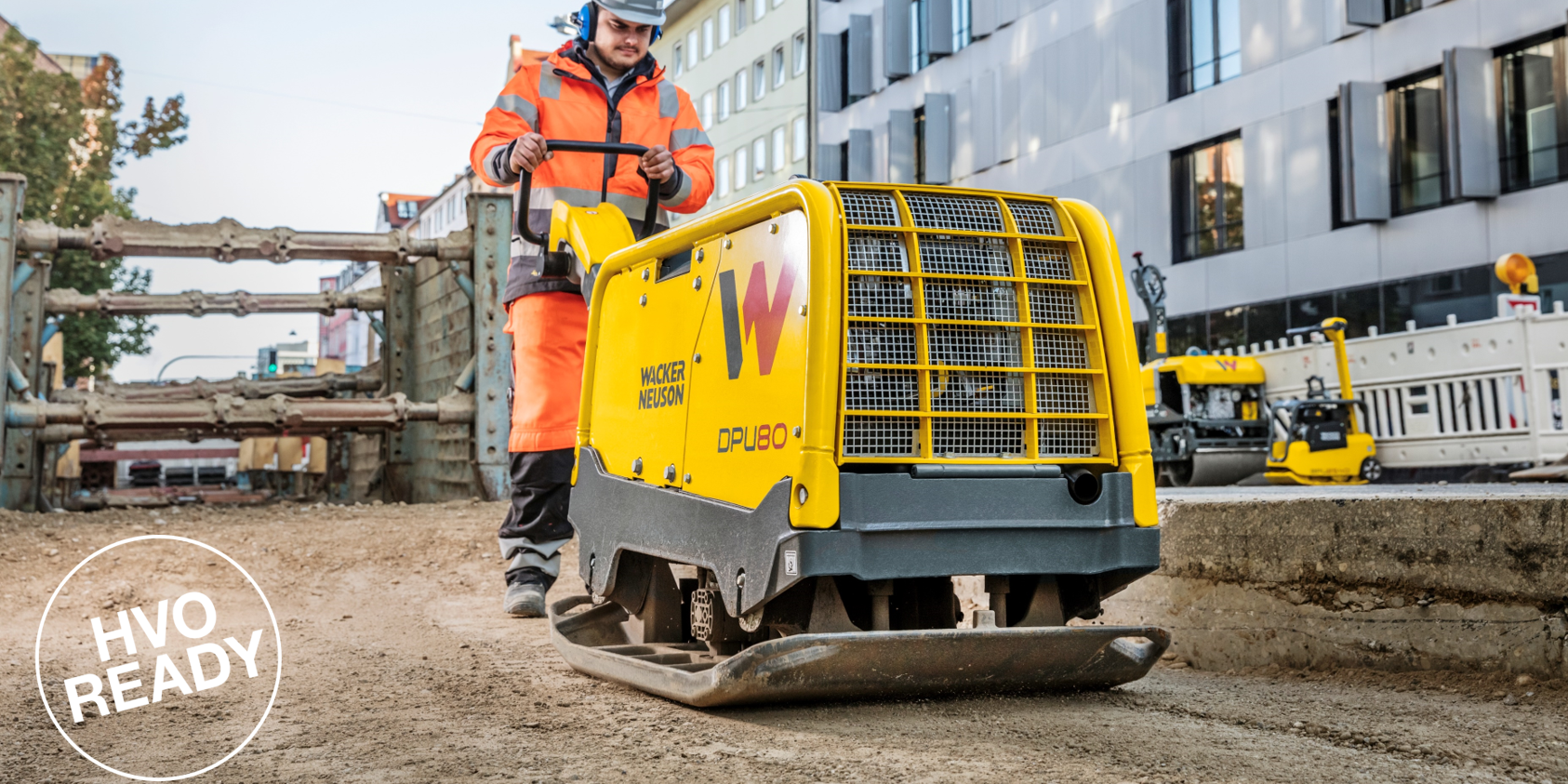
All Wacker Neuson construction equipment and machines with a Stage 5 diesel engine can be sold with HVO according to EN15940, such as excavatorsdumpers, and telehandlers, as well as vibratory platesvibratory rammers, and rollers.

Since September 2024 almost all machines from Wacker Neuson are already pre-filled with HVO fuelex works. As a forward-thinking trailblazer, Wacker Neuson is therefore taking a definitive step into a more sustainable future. 

Would you like to learn more about this? We have answered many queries in our FAQs. You can also contact your service partner near you.


FAQ - Frequently Asked Questions on HVO (Hydrotreated Vegetable Oil)

HVO general information

  • What does HVO stand for?
    HVO stands for “Hydrotreated Vegetable Oil”.
  • How is HVO different to a diesel fossil fuel?
    HVO fuel is clear and different to a diesel fossil fuel in that it is almost odor-free.
  • Are the sustainable diesel fuels HVO and biodiesel (rapeseed oil) the same?
    No. The fuels differ in the processing of the raw materials used and as a result, they are two different fuel types. 
    The HVO fuel pursuant to EN 15940 is exclusively approved for Wacker Neuson products.
  • Is HVO produced from palm oil?
    No. Since the introduction of the European Renewable Energy Directive (RED II) in 2023, the use of palm oil is prohibited in bio-fuels.
  • Which raw materials are used for the manufacture of HVO?
    Plant-based raw materials, residues and waste products are used in its manufacture. Within the framework of the European Renewable Energy Directive, these must fulfill the strict sustainability criteria regarding environmental aspects, such as carbon footprint, protection of forests, etc. 
  • Which HVO fuels can I use in Wacker Neuson products?
    HVO fuel must fulfill the provisions of DIN EN 15940 for paraffinic diesel fuels.
    All Wacker Neuson equipment and machines with Stage 5 diesel engines are approved for the use of HVO fuels pursuant to EN15940. This includes excavators, dumpers, wheel loaders, telehandlers, as well as vibratory plates, vibratory rammers and rollers.
  • How do I know whether my machine is suitable for the use of HVO? 
    All Wacker Neuson machines that are fueled with HVO ex works have a corresponding sticker near the tank filler neck. 
    Essentially, all Wacker Neuson products are approved for HVO. Among older vehicles it is the combustion engine Stage 5 that is suitable for HVO; however, the fuel-containing components (seals, filters, hoses, etc.) must be tested for HVO compatibility. 
    Alternatively, you can contact your Wacker Neuson distributor on-site. Here you can find your nearest Wacker Neuson distributor.


Sustainability

  • Why is HVO environmentally-friendly? 
    When using fuels made from hydrotreated vegetable oils, the operation of a combustion engine is carbon-neutrally. 
    Exclusively renewable raw materials are used for the manufacture of HVO. The combustion of HVO results in less greenhouse gases. Overall, carbon emissions can be reduced by up to 90 percent. And HVO is biodegradable.


Application

  • Do I need to consider anything in particular when using HVO, e.g., converting the engine?
    No, because the essential changes have been done ex works. 
    With older vehicles, the fuel-containing components (seals, filters, hoses, etc.) must be tested for HVO compatibility. All Stage 5 combustion engines of older vehicles are suitable for HVO. 
    There are no additional requirements in terms of storage or use when compared with fossil diesel. 
  • Can I also operate a machine with HVO, which has already been in operation for several years?
    All Stage 5 combustion engines of older vehicles are suitable for HVO. 
    The fuel-containing components in older vehicles, like seals, filters and hoses, must be tested for HVO compatibility. Please contact your Wacker Neuson Customer Services to confirm the compatibility of your precise machine model.
  • Do the service life and performance of the machine change with the use of HVO fuel? 
    HVO fuel has not exhibited a negative impact on the service life and maintenance intervals of the engine. 
    The energy content of HVO can be less. A negligible reduced output can therefore depend on the engine used and the specific application, yet this does not lead to a significant output loss.
  • Can I operate the engine with several different fuels?
    Yes. You do not have to decide upon one fuel, but you can operate the same combustion engine with either pure HVO, an HVO-diesel mixture, or a standard diesel. However, frequent changing between the fuels should be avoided. Please refer to the product’s service notice. If you have any questions, please do not hesitate to contact your Wacker Neuson distributor.
  • What are the additional benefits to using HVO?
    By using HVO, you can reduce the carbon emissions on your construction site by up to 90 percent without needing to change your machine fleet.
    HVO fuels have a shelf-life of several years.
Contact Contact

Contact