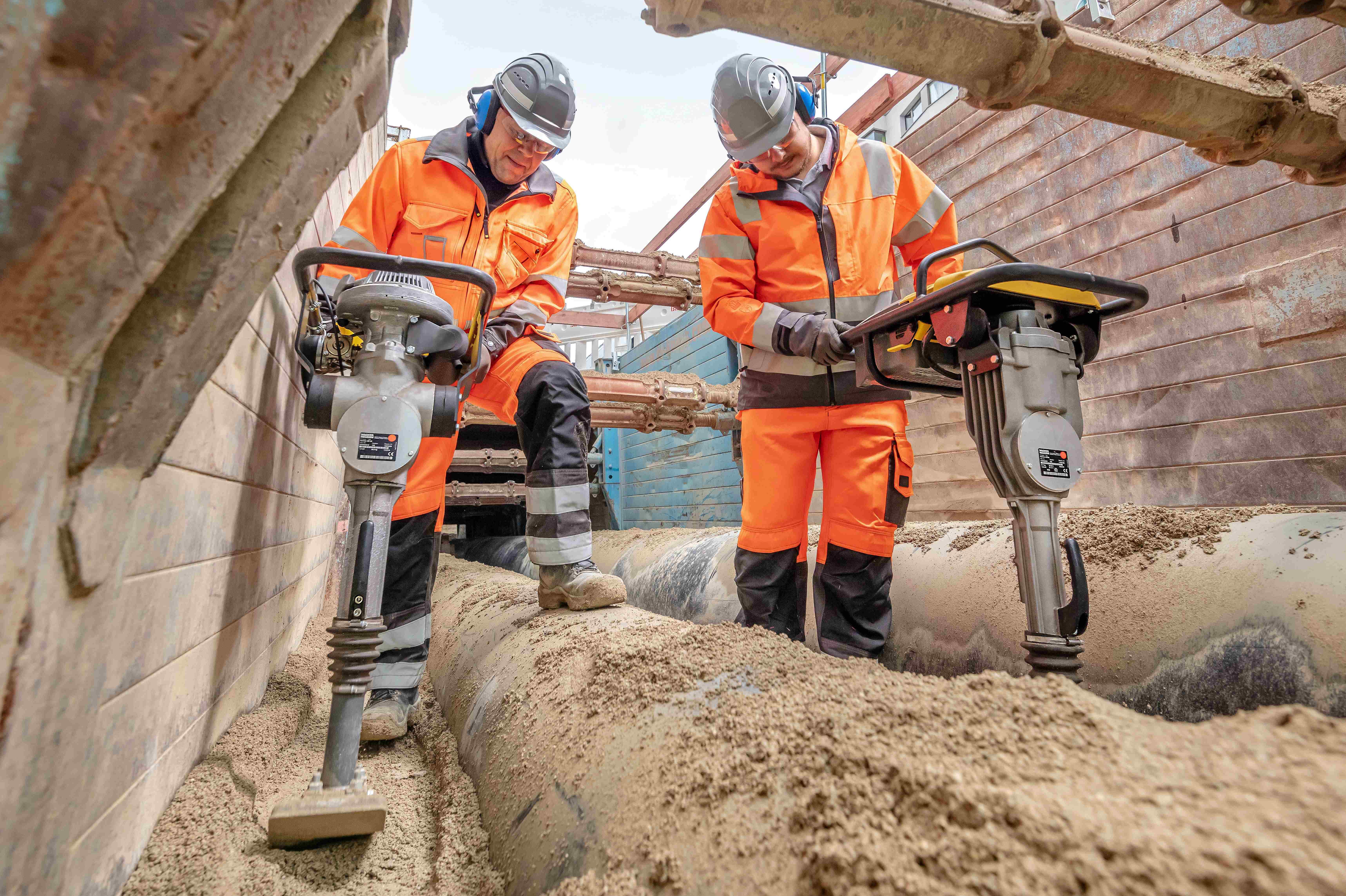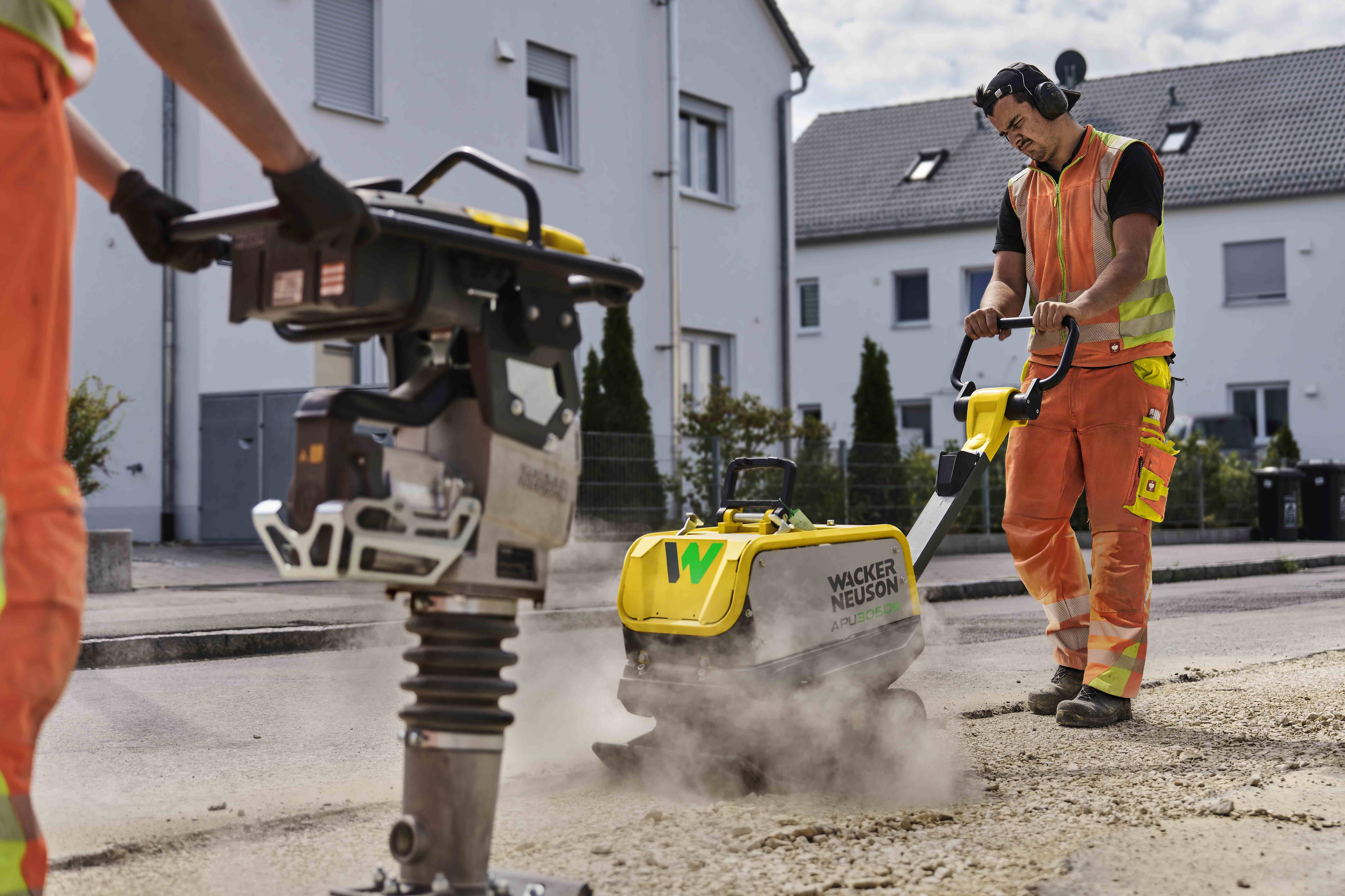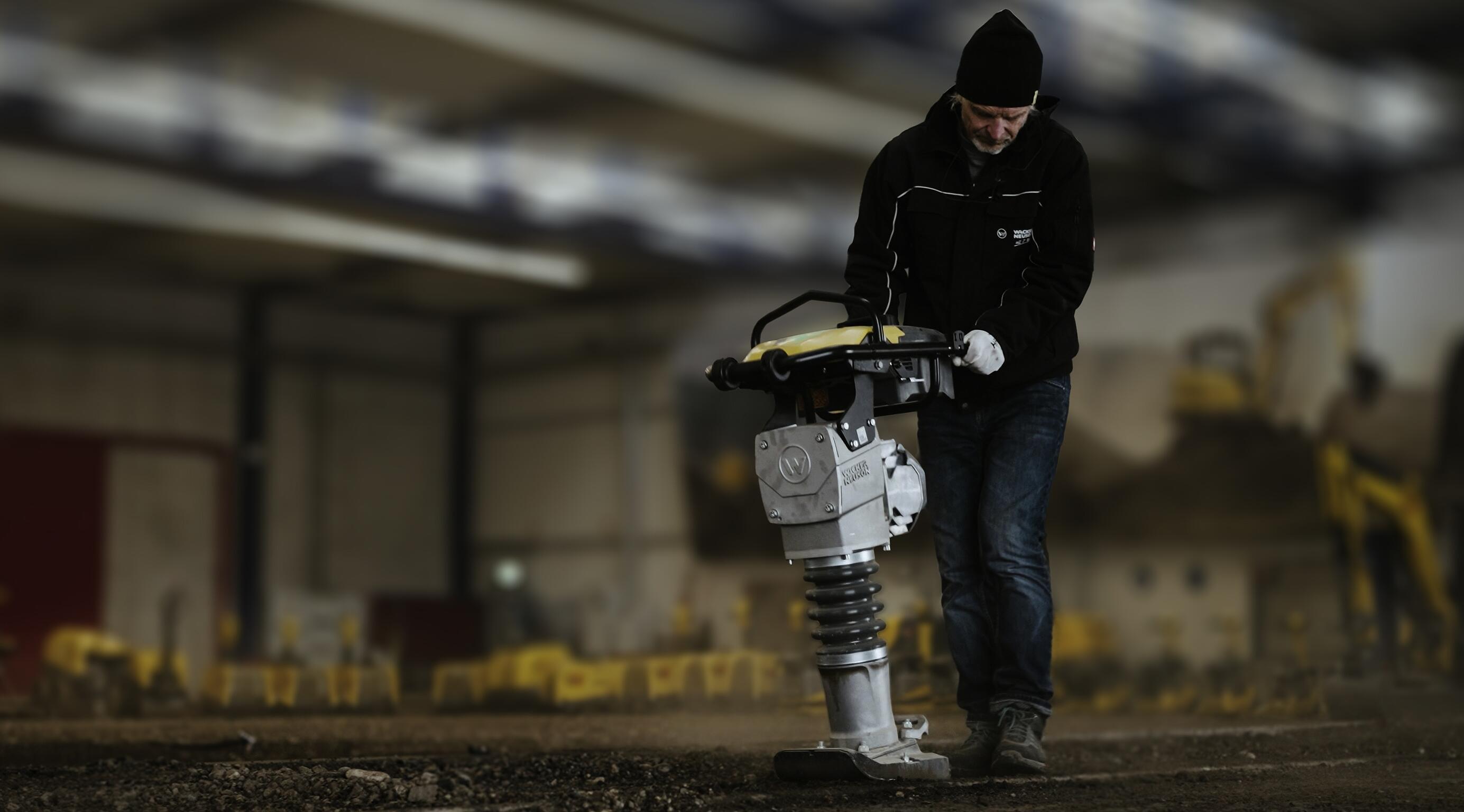
Worker operating rammer for soil compaction in indoor construction training environment

Who invented the vibratory rammer?

When it comes to soil compaction, the vibratory rammer is one of the most important pieces of construction equipment today. But who actually invented this piece of equipment?

The answer to the question “Who invented the vibratory rammer?” takes us back to the year 1930. At that time, Hermann Wacker developed the first electric rammer – one of the most important turning points in the history of Wacker and for work on the construction site. Initially, the electric rammer was mainly used in manufacturing precast concrete elements.
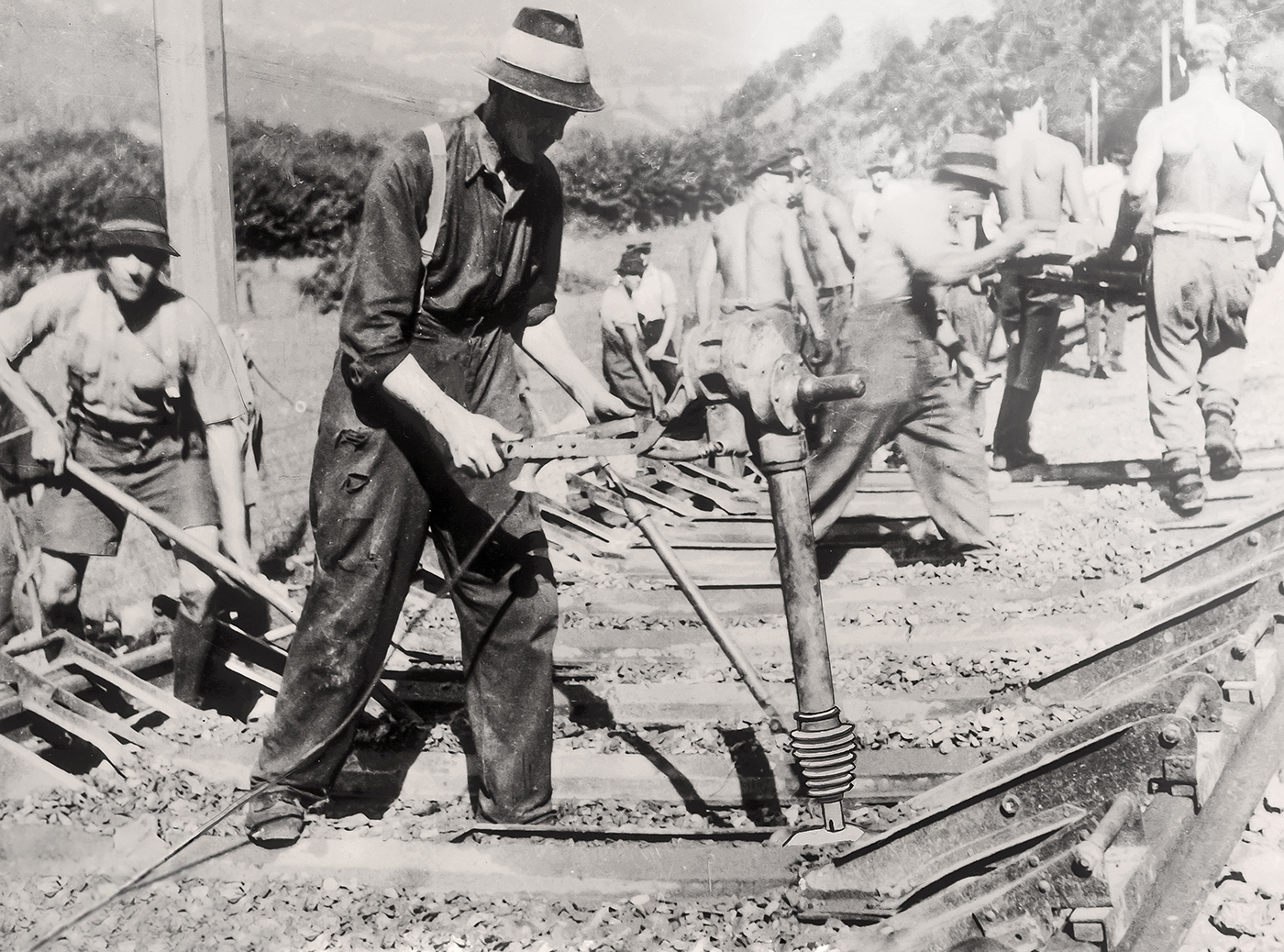
Historic railway workers using manual rammer for track soil compaction on construction site

Historical photo of the first electric rammer

The enormous potential of this invention for construction sites was quickly discovered, especially in soil compaction. The electric rammer revolutionized the way construction workers compacted soil – efficiently, reliably, and in a technically advanced manner. This way, Hermann Wacker laid the foundation for a completely new class of equipment, which impacted the construction industry worldwide.

From electric rammer to combustion engine – A new era begins

Another decisive milestone was reached in the 1950s:
Wacker equipped his vibratory rammer with combustion engines.

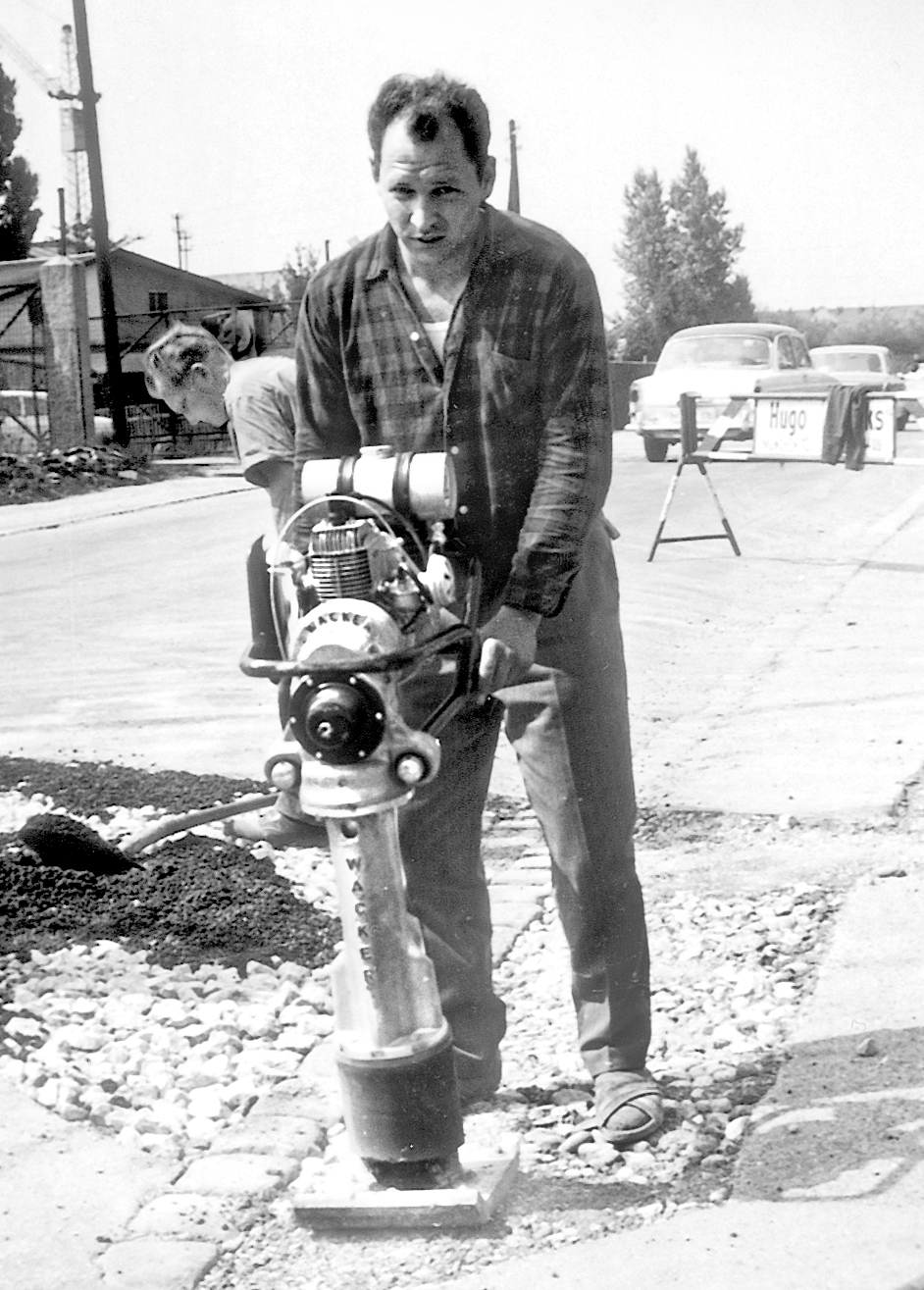
This was a breakthrough, as it meant that the equipment could also be used on construction sites without cables. This new mobility made the vibratory rammers more versatile and even more popular. Demand rose rapidly, and the vibratory rammer became standard equipment on construction sites.

With this innovation, Wacker Neuson once again demonstrated its pioneering role in the field of soil compaction.

Vintage Wacker Neuson rammer used for soil compaction during early road construction work

The first battery-powered rammer: Modern innovation meets tradition

The innovative strength of Wacker Neuson continued into the 21st century.
In the year 2014 , the company introduced the world’s first battery-powered rammer in the market – a groundbreaking combination of zero emissions, low noise level, and wireless flexibility.

Conclusion

The vibratory rammer is a lot more than just a piece of construction equipment – it is a piece of engineering history. A lot has changed since Hermann Wacker designed the first electric rammer in 1930. But one thing remains the same at Wacker Neuson: the passion for innovation and quality, which continues to drive the company to this day.

The journey from electric rammers and combustion engines to modern battery-powered rammers shows that technical progress and sustainability can go hand in hand.

You can find out more about the history of Wacker Neuson and its expertise and wide selection of products in the field of soil compaction here.

Contact Contact

Contact

Phone number: +65 6861 0446