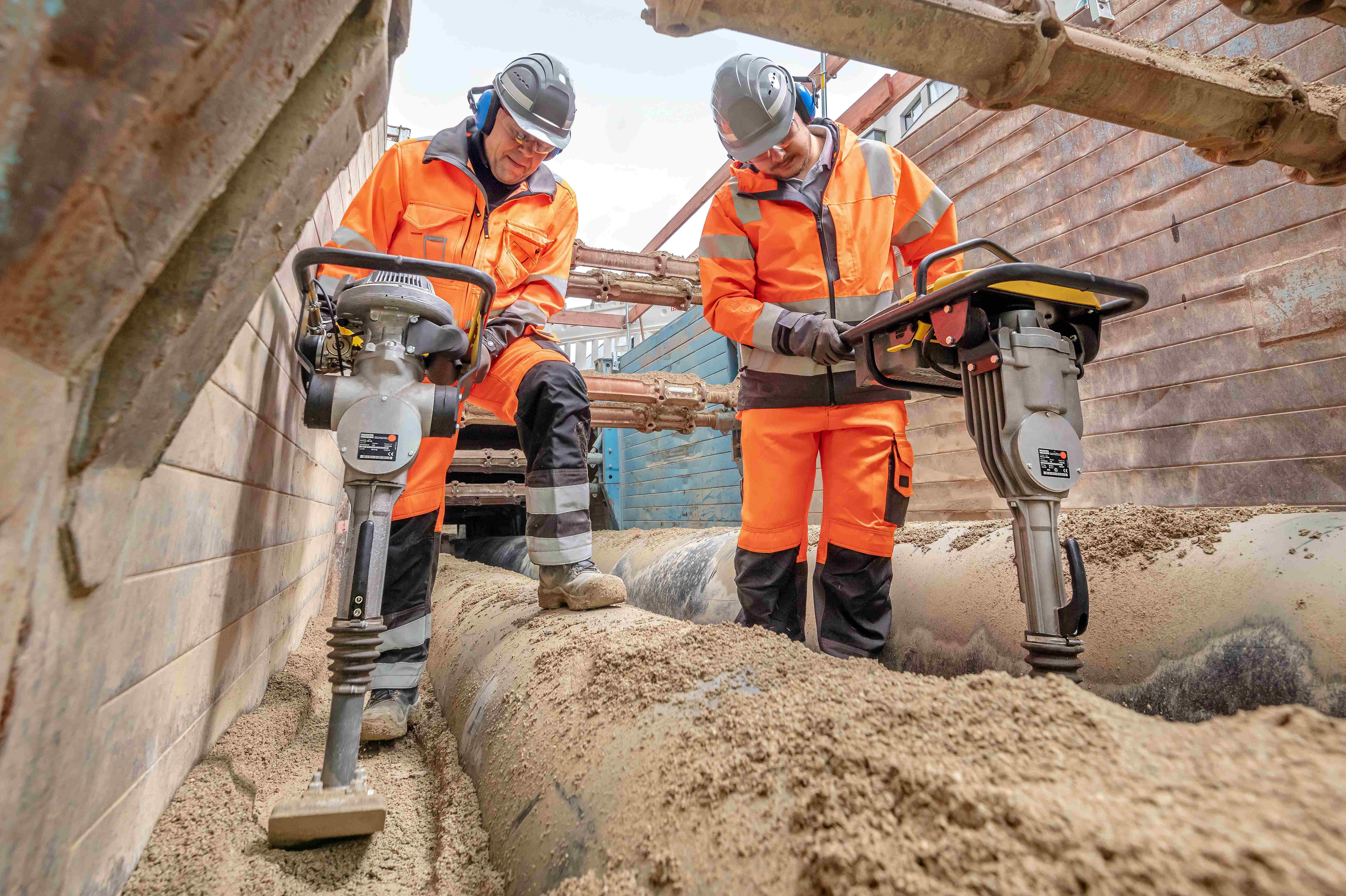
man operating electrical vibratory plate

What are reversible vibratory plates?

Reversible vibratory plates are special vibration plates that can operate in both forward and reverse directions. Unlike single-direction vibratory plates, which run in only one direction, they allow for flexible control of the direction of movement. This makes it possible to efficiently perform compaction even in narrow or hard-to-reach areas without the operator having to lift the machine or awkwardly turn it around.
How do reversible vibratory plates work?

The heart of a reversible vibratory plate is the exciter. This consists of two synchronously rotating shafts or unbalanced weights that generate a strong centrifugal force. This force acts on the ground and simultaneously lifts the plate slightly, creating the characteristic vibrating motion. 

The direction of rotation of the unbalanced weights can be changed via a hydraulic or mechanical control unit. This allows the machine to switch continuously between forward and reverse operation. A special feature: Many models, for example all reversible vibratory plates from Wacker Neuson, can also perform so-called stationary compaction — that is, compacting without moving.

Engine and exciter – a crucial interaction

A common misconception is to refer to the exciter as the “vibration motor.” In reality, however, it performs a different function:

  • Engine or battery:
    The engine—usually a gasoline or Diesel engine, or an electric motor with a battery—provides the mechanical energy for the drive system of the plate.
  • Exciter:
    The exciter converts this energy and sets the unbalanced weights in motion. Only then are the vibrations necessary for Soil compaction generated.

In short: No engine, no drive system—no exciter, no vibration.
 

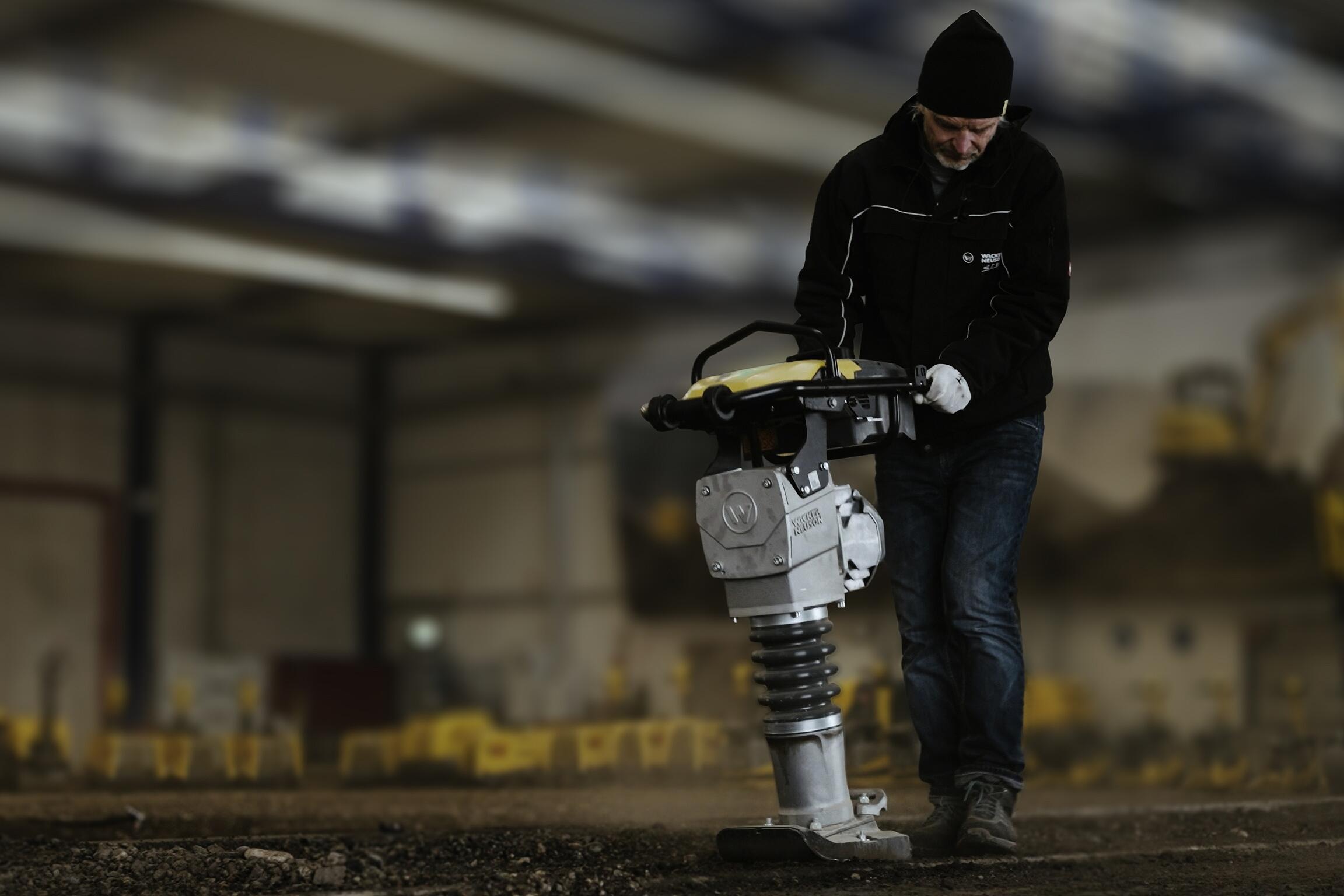
dpu62 plate in action
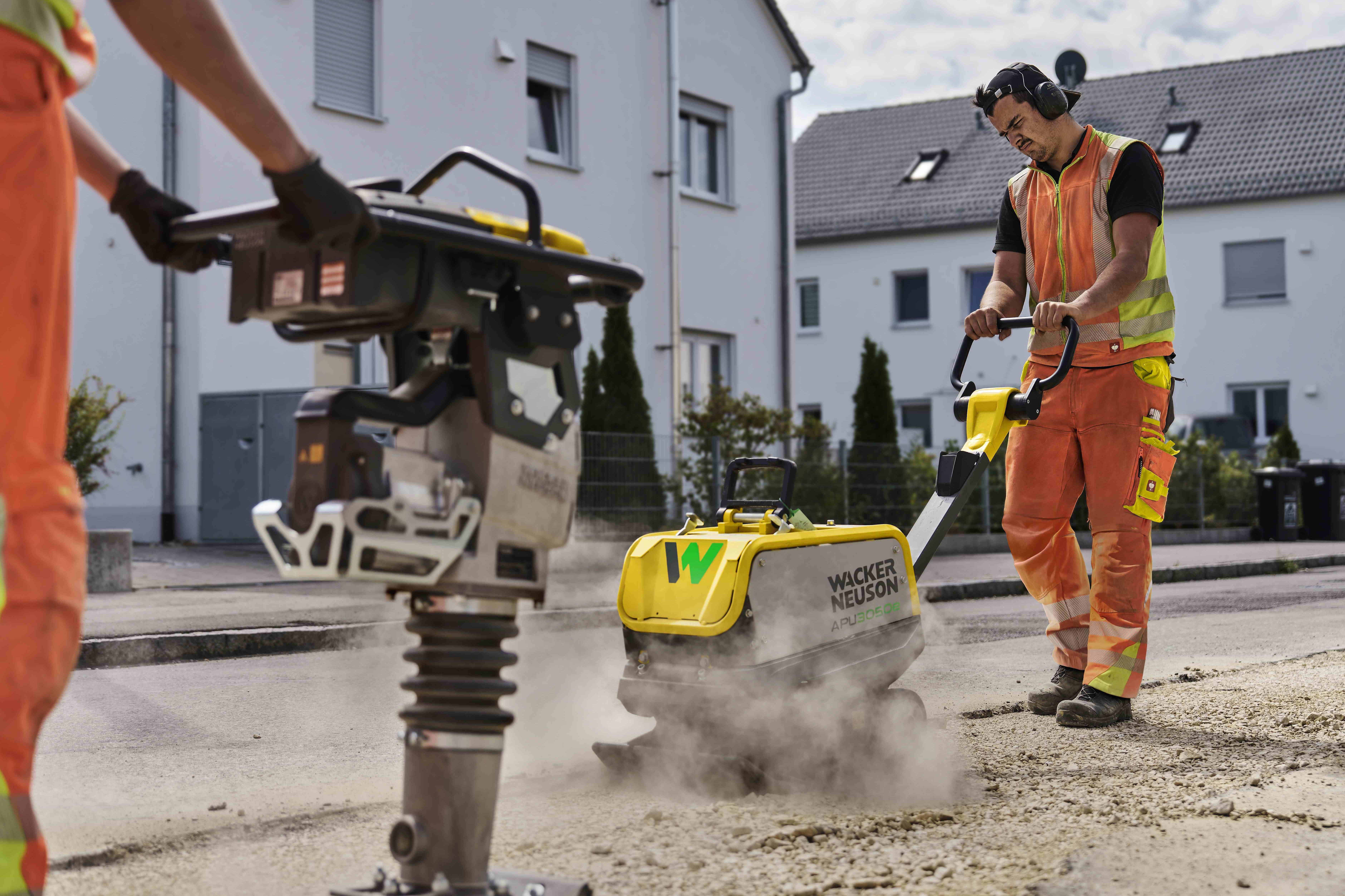
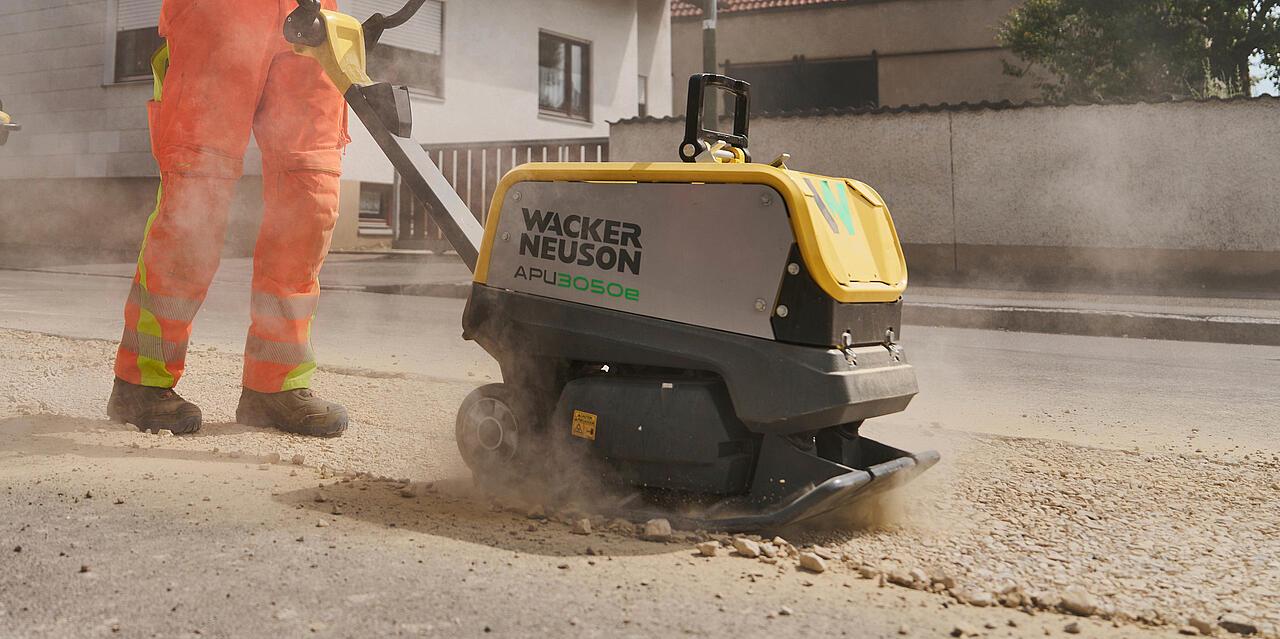
apu3050e plate in action
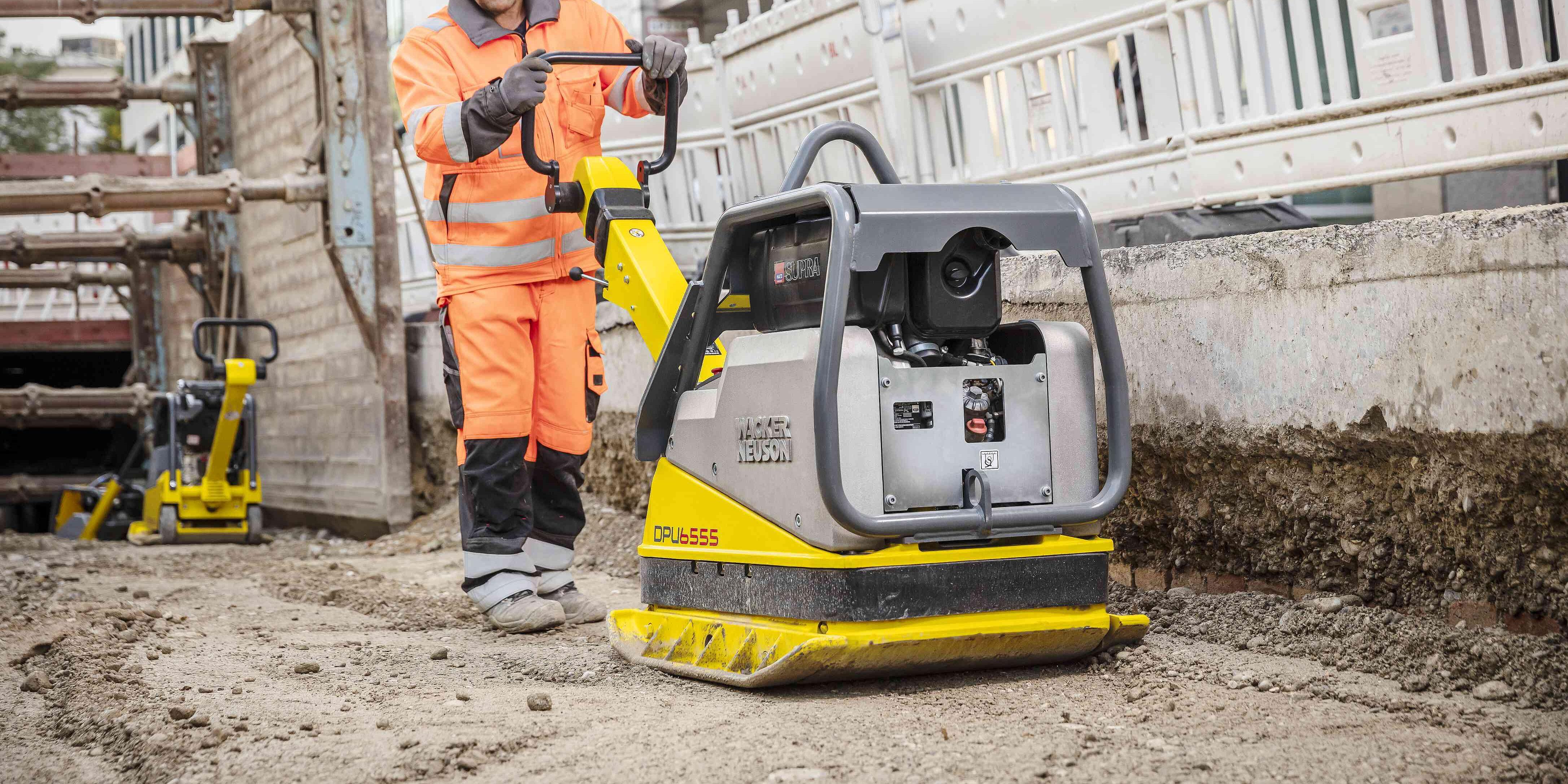
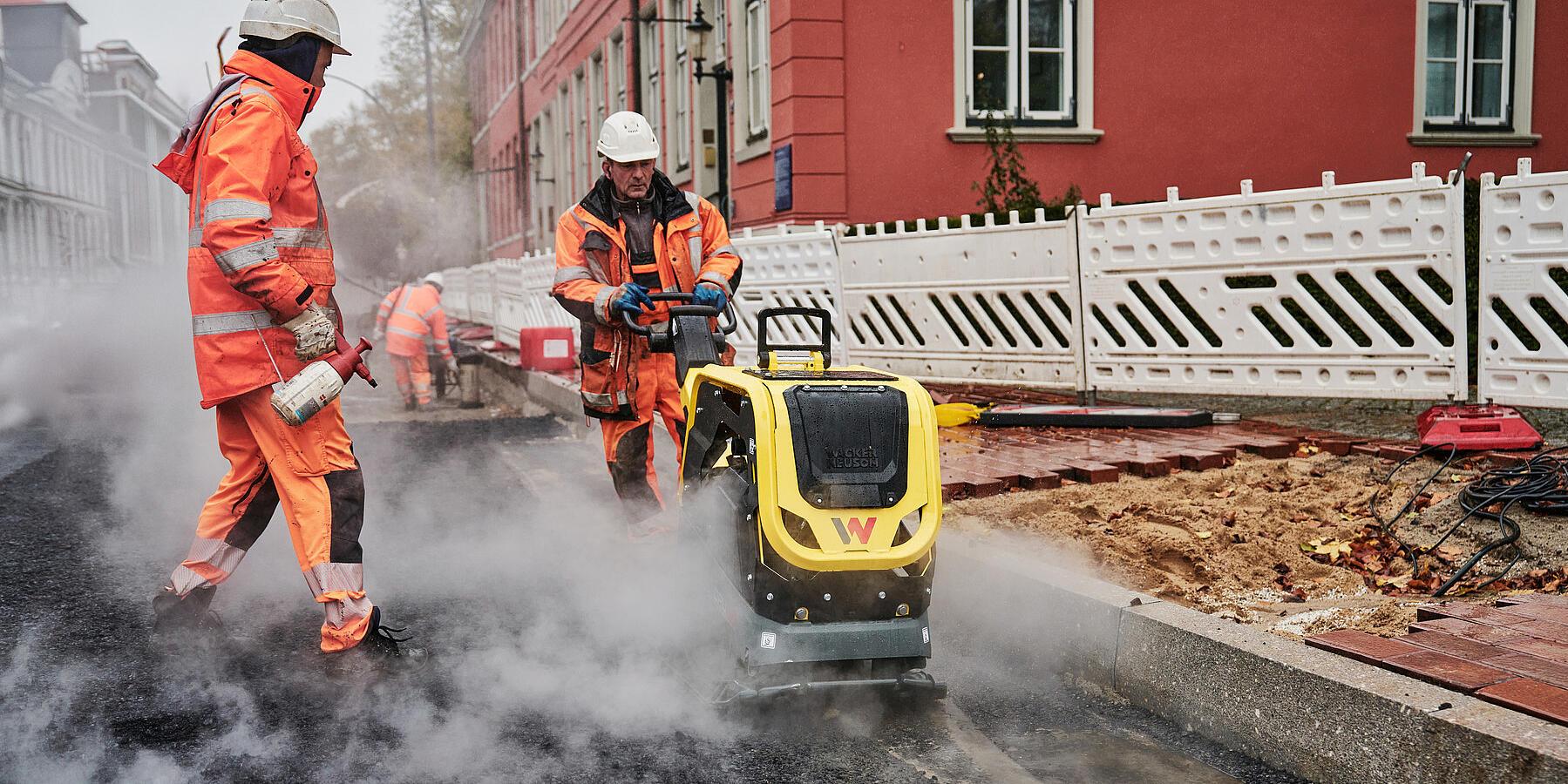
dpu6555 in action
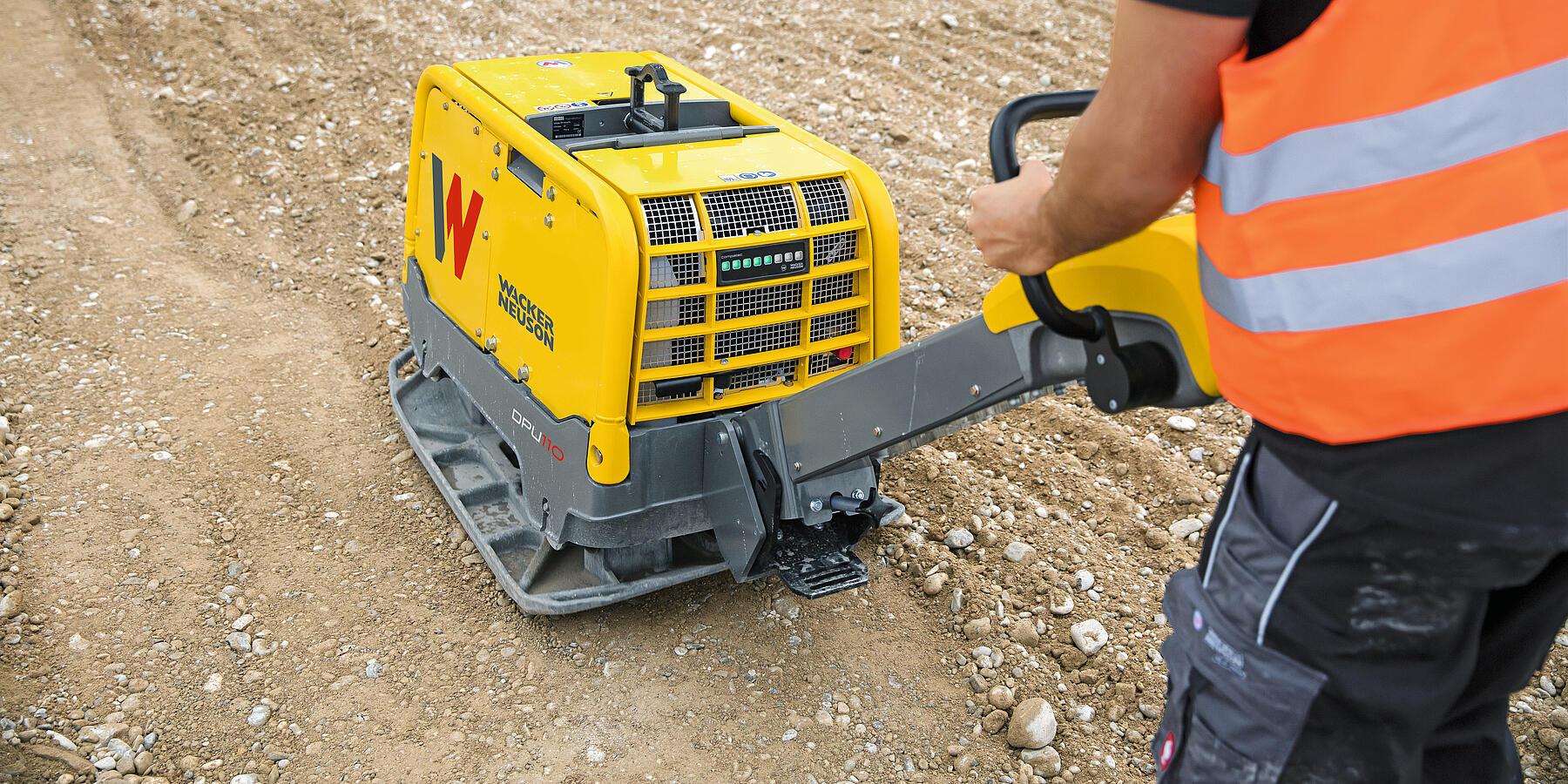
dpu110 plate in action

What are the advantages of reversible vibratory plates?

Reversible vibratory plates offer numerous advantages:

  • High maneuverability:
    Since they run forward and backward, there is no need for cumbersome turning or lifting. Perfect for trenches, shafts, or tight spaces.
  • Flexible compaction:
    Thanks to continuously variable speed control, different soil types can be worked on with precision.
  • Greater operating comfort:
    The effort required by the operator is significantly reduced, allowing for longer working periods without fatigue.
  • Versatility:
    They are suitable for paving work, gardening and landscaping, road construction, and professional construction site projects.

Conclusion

Reversible vibratory plates are true all-rounders among compaction tools; thanks to their ability to change direction, they are particularly well-suited for hard-to-reach or complex areas. They combine high compaction power with ease of use, making construction work more efficient. 

Wacker Neuson offers a wide selection of reversible vibratory plates for a wide range of applications—from garden projects to professional construction sites.

Frequently Asked Questions (FAQ)

  • What is a reversible vibratory plate?

    A vibratory plate that runs both forward and backward, making it more versatile.

  • What are reversible vibratory plates used for?

    They perform compaction on soil and subbase during paving work, in landscaping, road construction, or in trenches.

  • How do they differ from other vibratory plates?

    Standard models move in only one direction, while Reversible plates can operate both forward and backward.

  • Can reversible vibratory plates also operate while stationary?

    Yes, many models feature a stationary vibration function.

  • What power source do reversible vibratory plates use?

    Typically gasoline or Diesel engines; Wacker Neuson equipment also features battery-powered electric motors.

  • Is the application worth it for private projects?

    Yes, they make work much easier, especially for paving projects or garden projects.

Contact Contact

Contact